
listen about me
KARANJ
Botanical Name: Milletia pinnata (L.) Panigrahi [Pongamia pinnata L.]
Family: Fabaceae
Common Name: Karanj, Indian Beech, Pongame oil Tree
Scientific Classification
Class- Dicotyledoneae
Division- Polypetalae
Series- Calyciflorae
Family- Leguminosae/Fabaceae/ Papilionaceae
Genus- Milletia
Species- pinnata
Scientific name- Milletia pinnata (L.) Panigrahi
Distribution:
This species is naturally distributed in tropical and temperate regions of Asia, from India to Japan to Thailand to Malaysia, N.E. Australia to Pacific Islands. The tree is well suited to intense heat and sunlight. It is draught tolerant species.
Description:
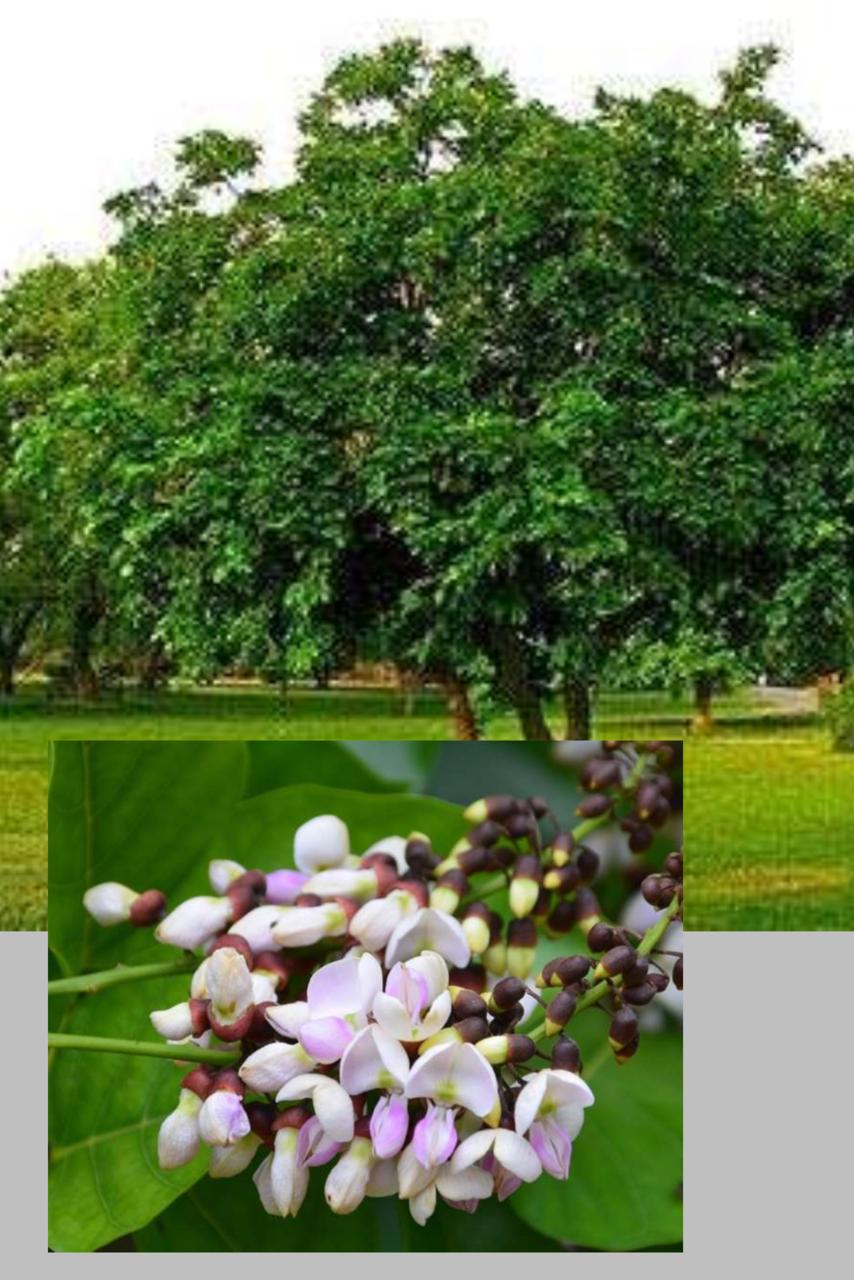
Habit & Habitat: Karanj tree grows 50-6- ft. height with large canopy spread. It is growing along the river bank. It may be deciduous for short periods.
Stem- Trunk is crooked with gray-brown bark, which is smooth or vertically fissured.
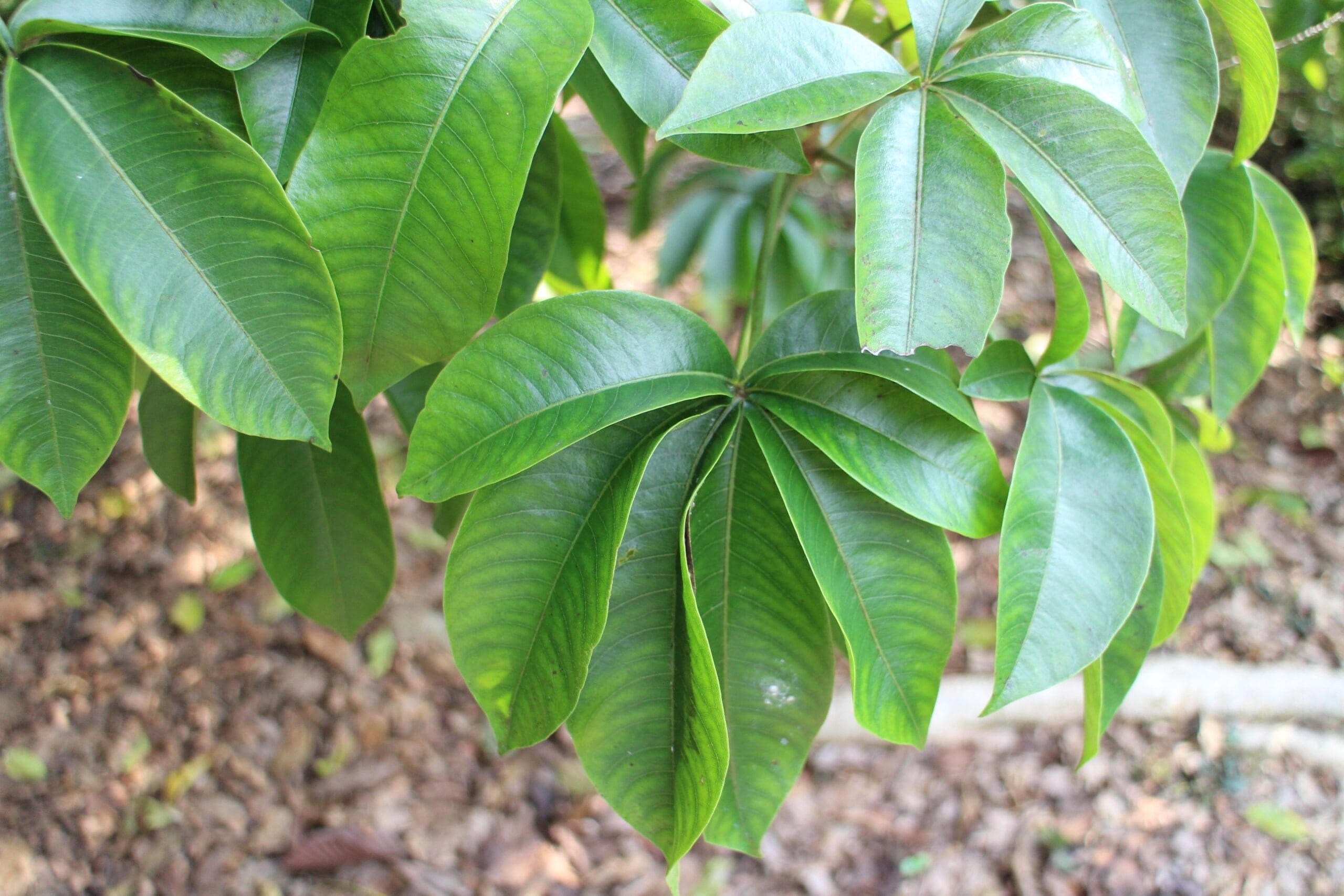
Leaves– Leaves are bipinnate, imparipinnately compound, alternate, short petiole, base rounded or cuneate, lamina ovate or oblong with obtuse or acuminate apex. Young leaves are soft, shiny, thin and became glossy, deep green at maturity.
Flowers– Flowers small in clusters of white, purple and pink flowers. Flowers are fragrant onlong raceme inflorescence. Calyx is bell-shaped and truncated, corolla is rounded,
ovate shape with basal auricles and often with a central blotch of green colour.
Fruits– Pods are flat, yellowish-brown, thick walled, smooth, somewhat flattened and
elliptical and slightly curved at tip. Each pod is with 1/2 bean shaped seeds.
Uses: It has many traditional uses, often used for landscaping as a windbreaker. Its canopy and
flowers are showy so best suitable for plantation in arid zone. Bark is used to make twine or rope, also yields a black gum. Seeds contain 30-40 % oil, 17-37 % protein, 6-7 % starch, 5-7% crude fiber and 15-20 % moisture.
Seed oil– Pongamia oil is used as lamp oil, in soap
making and lubricant. Oil is also useful for biodiesel.
Note– The taproot of this plant makes it draught tolerance. The dense shade it provides slows the evaporation of surface water and its root nodules promote nitrogen fixation. It is also a freshwater flooded forest species, as it can survive in total submergence in water for few months continuously.