
listen about me
Scientific Classification
Kingdom: Plantae (Plants)
Clade: Tracheophytes (Vascular plants)
Clade: Angiosperms (Flowering plants)
Clade: Eudicots
Clade: Rosids
Order: Malvales
Family: Dipterocarpaceae
Genus: Vateria
Species: V. indica
Dhup
Botanical Name: Vateria indica L.
Family: Dipterocarpaceae
Common Name: Marathi- Dhup; English- Indian Copal tree
Distribution:
This tree is an endemic tree species naturally distributed exclusively along
the Western Ghats mountain range in southwestern India. But distributed in southern
districts of Maharashtra like Kolhapur, Stara and Sindhudurg.
Threats and Conservation Status: IUCN Red List: Critically Endangered
Primary Threats: Destructive resin tapping, Commercial logging (especially for the
plywood industry), Severe deforestation and agricultural clearing of lowland habitats, Low
seed viability and recalcitrant seeds that are highly sensitive to desiccation
Description:
Tree Size: Grows up to 25–40 meters tall with a trunk girth of up to 4 meters.
Bark: Smooth, greyish-brown, and relatively thin. It peels off in large, round,
greenish and whitish flakes, exuding a sticky, aromatic white resin when cut.
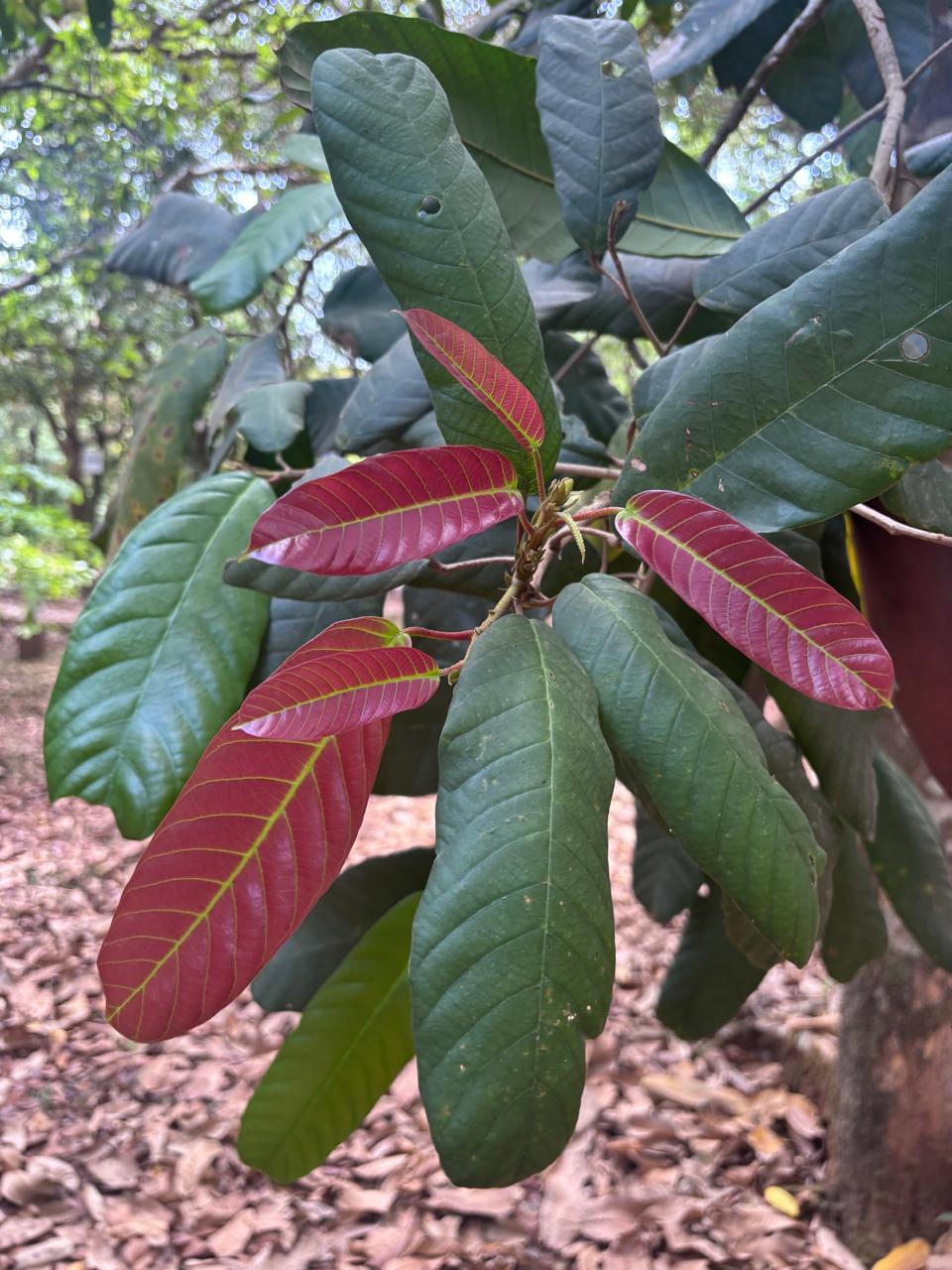
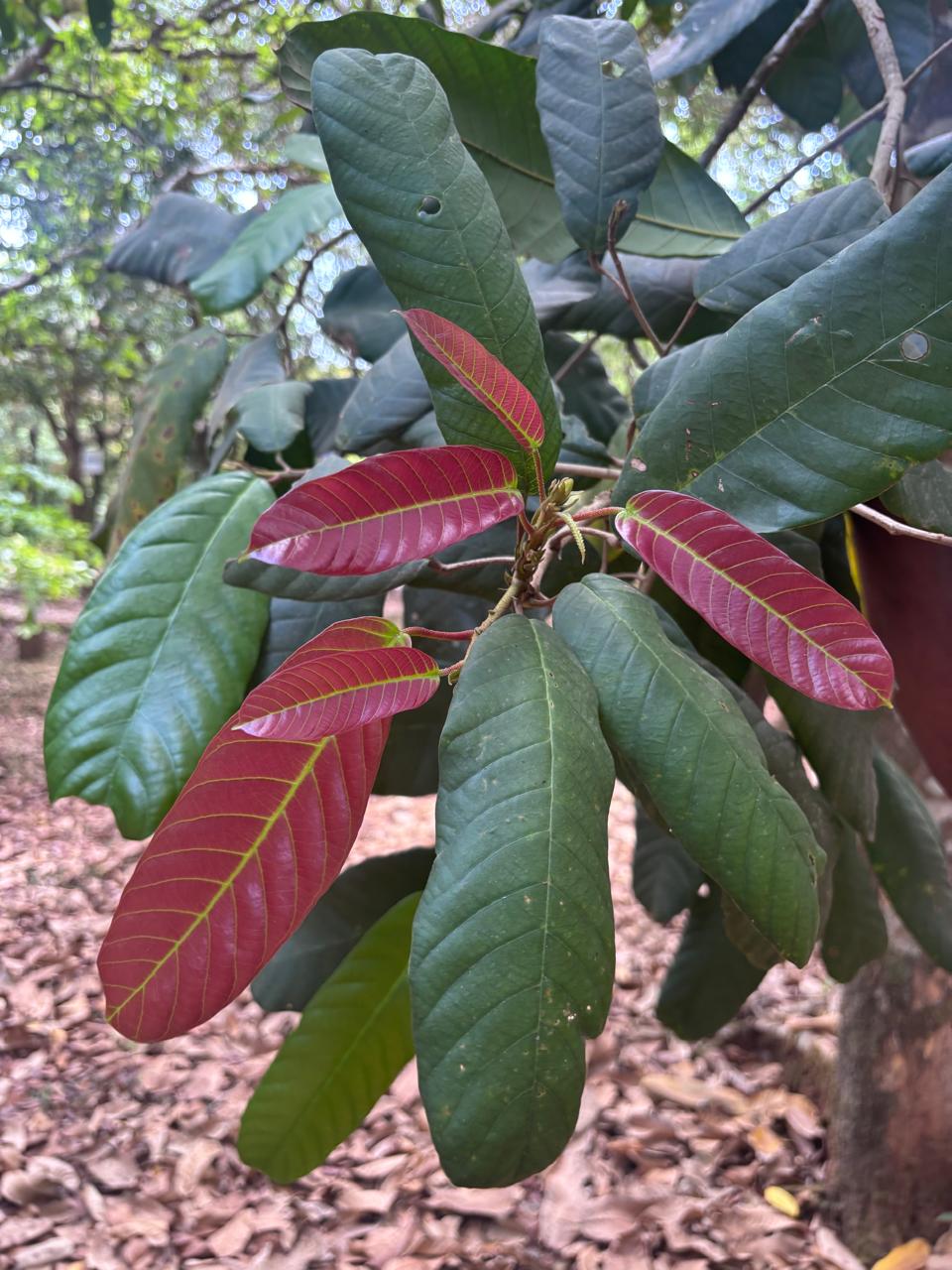
Leaves: Alternate, leathery, and oblong. They measure 8–27 cm long and 4.5–10 cm
wide, with a prominent midrib.
Colour: Young leaves emerge a striking dark red or maroon, gradually shifting to
pinkish-red, and finally maturing to a deep green.
Flowers: Bloom between March and August in dense, multi-branched terminal
panicles. They are white, slightly fragrant, and about 2–3 cm across with yellow
anthers.
Fruit: A pale brown, 3-valved oblong capsule (approximately 4–6 cm long) that
splits open when ripe to reveal a single seed.
Uses:
Wound & Skin Care: The resin and bark extracts are traditionally applied to treat
wounds, boils, burns, ringworm, and cracked feet.
Respiratory Relief: It is used in traditional medicine to manage chronic bronchitis,
throat troubles, coughs, and asthma.